
Today, I’m going to discuss a card that’s commonly played, yet so often misplayed: Effect Veiler. First, just like all future “Show Me The Way” articles, I’ll go into a brief discussion explaining why this card is amazing this format (and therefore, why you should be playing it!), then I’ll follow up on how to play it. So, let’s talk about Effect Veiler!
Since Heavy Storm is back this format, most good players you’ll be playing against in premier events will play conservatively - they won’t set their backrow so hastily, nor will they set all of their backrow if they draw into multiple. In fact, since Mystical Space Typhoon is now basking in its unlimited status, you’ll find that several players have eliminated non-chainable backrow from their decks altogether to leave their opponents with “dead” copies of Typhoon and Storm! Therefore, the focus has shifted away from backrow and toward “hand-traps” to stop an opponent from going off. Great examples of these “hand-traps” are Effect Veiler, Maxx “C”, and D.D. Crow.

Effect Veiler is perhaps the most prominent example of the three. Since monster spam and removal are typically achieved through other monster effects, such as XX-Saber Faultroll, The Agent of Creation - Venus, Black Rose Dragon, Scrap Dragon, and Brionac, you can see how powerful monster effects are - especially when they go off unhindered by opposing backrow! This is extraordinarily relevant because, in case you haven’t noticed, games are typically won this format in one (or both) of these ways: massive monster swarms and destruction. Since Effect Veiler prevents (to some extent) these scenarios from happening, you can imagine why it’s such a great card. Therefore, it’s logical to see how handy negating these monster effects are, and just to recap, there are two reasons: traps have gone down in utility this format and more games are won through monster effects than ever before.
However, there’s a problem: many players simply struggle to figure out when (and why) to play Effect Veiler. There are two rules to playing Effect Veiler. The first rule, perhaps the broadest and one most commonly utilized is:
Rule 1: Play Effect Veiler when card advantage deems it favorable to do so.
In other words, play Veiler when the card advantage is more favorable to you than your opponent. Let’s take the following example:
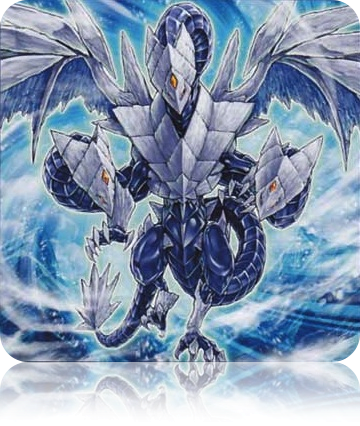
Case 1: Your opponent special summons T.G. Striker and Warwolf, then normal summons T.G. Rush Rhino. You can see a Trishula play coming. He synchs into Trishula, targeting three of your cards. You chain Effect Veiler.
Why is this favorable? Well, let’s look at the card advantage involved from your side of the field: -3 monsters to synchro Trishula +1 Trishula - 1 Effect Veiler = -3 +1 + 1 = [+2]. Therefore, you’ve given up 1 card, while your opponent gave up 3, netting you a cool [+2]. Indeed, card advantage deems this is a great play!
However, keep in mind that you don’t necessarily have to come out in the plus range [+X] to play Veiler well. For example, if your opponent summons a card that generates massive card advantage (say, a [-3] or [-4] for you), then it’s much better to take the inherent [-1] from playing Veiler (since it goes from your hand to the grave, generating no immediate advantage) than take the massive disadvantage. Examples of this are Black Rose Dragon or Dark Armed Dragon plays when you have several cards committed to the field. Though these card-advantage focused examples are obvious ones, there are some situations where playing Veiler might not be so obvious. Thankfully, this is where the second rule comes in handy!

The second (and less precise) rule to playing Veiler is:
Rule 2: Play Veiler when your setup for the rest of the game is in immediate danger.
Let’s say you’re playing Frog Monarchs and you have a Sangan in your hand with nothing else but tribute monsters and Effect Veiler. You set the Sangan, hoping to score your Swap Frog and set up for the rest of the game from there. Your opponent recognizes this as an extremely passive play and capitalizes on it. He special summons Swap Frog by discarding Treeborn and tributing the Swap Frog for Caius, targeting the face down Sangan. Your setup is in extreme danger here! You won‘t be able to play any of the cards in your hand unless you get your Swap Frog, so it’s necessary to play Veiler in this case.
Now that I’ve explained how to play Veiler, I’ll explain how not to play Veiler. First and foremost, do not play Veiler on any little monster effect. For example, if you know your opponent is going to use Zombie Master’s effect, discarding a monster and targeting Plaguespreader to synchro into Brionac or Orient Dragon to rid you of your Stardust, do not play Veiler on Zombie Master! Instead, play Veiler on Brionac or Orient Dragon, since neither of these cards can power over your Stardust. It requires foresight, but with practice, you’ll get the hang of it.
That being said, there are some things you’ll almost unconditionally Veiler. I’ll let you in on a couple of them, but it’s up to you to figure out what the pattern is! My two examples are:
Trishula. If you let Trishula’s effect resolve, you’ll be out a card in your hand and on your field (and possibly a key graveyard card, like Spore or Plaguespreader). But if you Veiler, you’ll only be out a card in your hand.
Spirit Reaper. If Spirit Reaper makes a direct attack and you have Veiler in hand and say, Dark Armed Dragon with exactly three darks in the grave, you should definitely Veiler. In fact, if you have any other live card in your hand, you should Veiler the Reaper. Why? Because you’ll lose a card anyway to Reaper’s direct attack, so it might as well be one that isn’t critical to your strategy.

So what’s the pattern from these examples? Here’s the answer: it’s card advantage. You’ll be losing cards in either case, so you might as well make the most of them. If you’re not understanding the concept of card advantage, be sure to go back to the main page and check out the article! If you’re suffering from Veiler misplays, you’ll need to brush up on foresight and card advantage. Take a moment to compute the card advantage before and after effects go off to determine whether Veiler is something you’d want to play, then think about how badly an effect going off will affect your strategy and setup. Remember, practice makes perfect!
Dr. House


